
Lagoa do Fogo
Emerald crater lake in Azores' volcanic interior
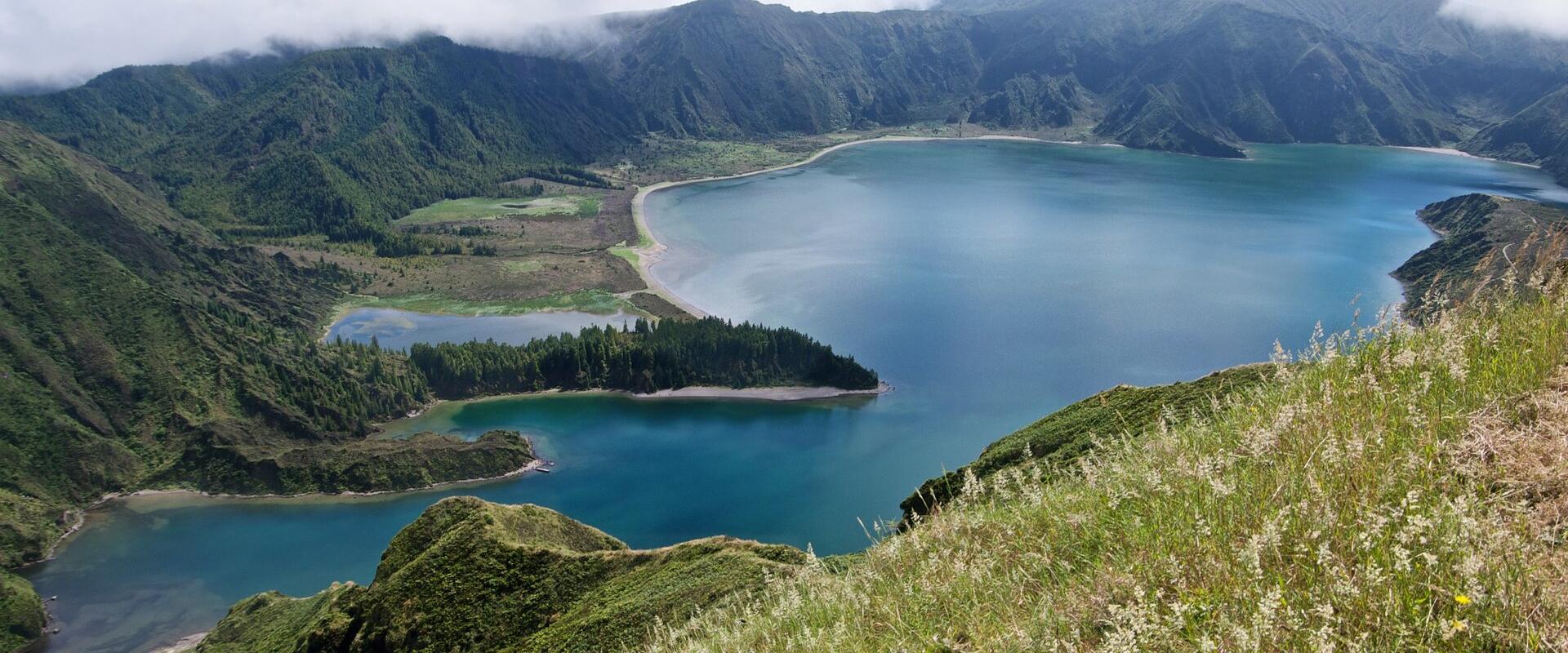
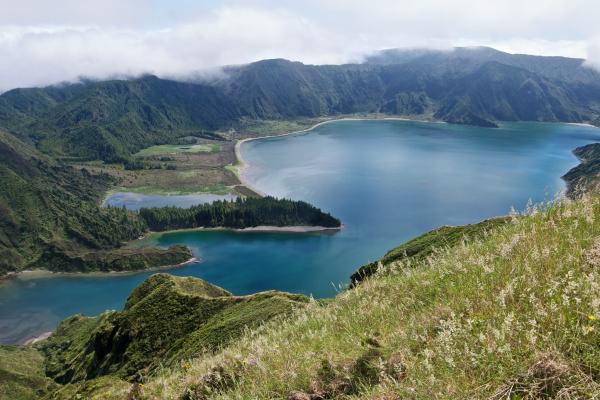
The Lagoa do Fogo, the Lake of Fire, is a crater lake in the centre of São Miguel, in the high mountains between the north and south coasts, and it is regarded by many as the most beautiful lake on the island. It lies at about 575 metres above sea level in the caldera of the Água de Pau volcano, the central of the island's three large volcanoes, and its surface is a deep blue-green set in a ring of steep green slopes. The lake has no road to the shore, and a visit demands a little effort, which is part of the reward.
The name does not mean what it seems. The lake itself is cold, and the Fire in its name refers to the volcano. The volcano was formed through a series of eruptions over thousands of years, and a major eruption in the 16th century, in 1563, shot pumice and ash across the landscape, and it left a thick layer of pale pumice that still covers the lakeside. Today, the volcano is dormant, though the island's thermal springs, fumaroles and earthquakes show that it is not extinct. The lake and its surroundings are protected as a nature reserve, with a rich variety of plants, among them native species such as juniper, heather and a mix of mosses and ferns on the slopes, and the lake is home to waterbirds.
Access is managed to reduce traffic. A narrow road climbs from the coast to a viewpoint above the lake, the Miradouro da Barrosa, from which the whole lagoon is visible. In summer, usually from mid-June to the end of September, private cars are restricted on the final stretch, and visitors use a shuttle bus, while outside this period, access by car is normally possible, subject to weather and road conditions. It is a good idea to check the current arrangements with the tourist office or the park, as fees and times may change. The viewpoint offers the classic picture of the lake, with a long, curving shore and little pale beaches, while the clouds sweep over the rim.
For a closer look, a marked trail leads from the road down to the shore, descending steeply through woodland and scrub to the sand, a walk of an hour or so each way, with a long, tiring climb back. The beach, of pale volcanic sand, is quiet, and in good weather, it is possible to swim in the cold, clear water, though there are no facilities, so bring food, water and warm clothing. Other trails follow the rim of the crater or cross the hills toward the coast at Ribeira Grande.
The lake is subject to weather. Mist and clouds often fill the crater, hiding the view completely, and conditions can change within minutes, so patience and a flexible plan help. A waterproof jacket and good footwear are important. The lake suits walkers, photographers and anyone who loves a wild landscape.
Categories
More photos coming soon
Nearby Attractions
Other places to visit in São Miguel Island
Frequently Asked Questions
Quick Facts
Best Time to Visit
May to October offers mild weather, lush scenery, and optimal conditions for hiking, hot springs, and whale watching on São Miguel Island.